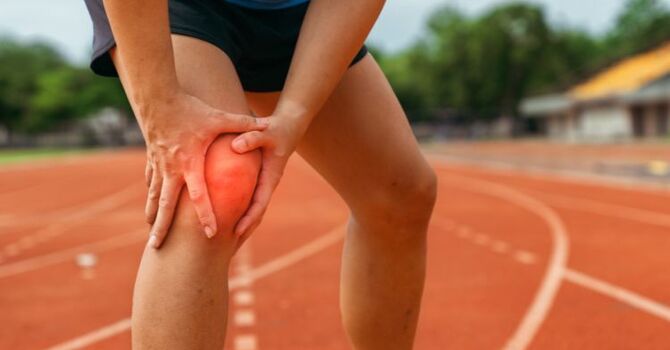
A hamstring that never quite settles, a shoulder that clicks on every serve, a knee that stiffens after every run: sports injuries tend to linger when you keep playing around them, and rest alone doesn't always finish the job.
That's where manual therapy for sports injuries comes in. At Eisenhauer & Smith Physiotherapy (ESPhysiotherapy), our physiotherapists use their hands to move stiff joints and ease tight tissue, then pair that work with exercise so you can return to your sport with confidence. Below, we cover how it works, which injuries it suits, and what happens at your first visit.
What Is Manual Therapy in Physiotherapy?
Manual therapy is hands-on physiotherapy. Your physiotherapist uses skilled techniques to move your joints and work through your muscles and other soft tissue, with the aim of reducing pain and improving how you move. Cleveland Clinic's physical therapy team lists it among its core treatments for easing pain, reducing swelling, and getting people moving again.
Hands-on care tends to give the most benefit when it's combined with exercise rather than used alone. Manual therapy for sports injuries calms things down and restores some freedom of movement. Strengthening and movement training then help that progress stick.
How Manual Therapy for Sports Injuries Works
Sports injuries rarely stay in one spot. A sprained ankle changes how you walk, and a sore shoulder changes how you throw. Manual therapy techniques address the injured area and the joints and muscles that picked up the slack.
Joint Mobilization
Your physiotherapist guides a joint through small, controlled movements and gradually works toward a bigger range. This can ease pain and help a stiff joint, like an ankle after a sprain, move more freely. Some techniques are gentle and rhythmic, others involve a sustained hold, and the choice depends on how irritable the injury is.
Soft-Tissue Techniques
Soft-tissue work uses pressure and stretching to ease tight muscles and tender tendons. After a strain, nearby muscles often tighten to protect the injury, and releasing that tension can make your exercises more comfortable.
Depending on your injury, your physiotherapist may also use specialized approaches, such as Mulligan mobilizations with movement or Graston Technique, an instrument-assisted method for working on soft tissue.
Sports Injuries That Respond to Manual Therapy
Manual therapy for sports injuries suits a wide range of problems, including:
- Muscle strains: Pulled hamstrings, calves, and groin muscles. According to Mayo Clinic, a strain injures a muscle or tendon, and the lower back and hamstrings are the most commonly affected areas.
- Ligament sprains: A sprain stretches or tears a ligament, and the ankle is the most common spot, Mayo Clinic notes. Once symptoms improve, a physiotherapist can guide exercises that restore strength and stability.
- Shoulder injuries: Stiffness and irritation from throwing, swimming, or racquet sports, including a rotator cuff injury.
- Knee pain and overuse injuries: Problems like runner's knee that build up with repeated training.
- Tendon irritation: Achilles and elbow tendons that complain after repetitive sprinting, jumping, or throwing.
- Post-surgical recovery: Rehab after procedures such as ACL repair.
Manual therapy isn't right for every injury. If you can't bear weight on a joint, have pain directly over a bone, or notice numbness, get a medical assessment first.
What to Expect From Sports Injury Physiotherapy in North York
Manual therapy for sports injuries at ESPhysiotherapy follows four steps:
- Assessment: A detailed movement assessment and a conversation about your sport and goals.
- Personalized plan: Treatment built around your injury, your training schedule, and how your body responds.
- Hands-on treatment: Joint mobilization and soft-tissue work, adjusted as your pain settles.
- Exercise and education: A tailored exercise prescription and guidance for training between visits, with acupuncture added when it suits your plan.
Take a weekend soccer player with a pulled hamstring. In the first week, treatment may focus on gentle soft-tissue work and easing pain so they can walk comfortably. As the muscle heals, hands-on work tapers off and strengthening takes over, which is the usual arc of sports rehab.
You can read more about our approach to sports injury rehab in North Toronto and our broader sports physiotherapy care.
When Should You Start Manual Therapy for Sports Injuries?
An early assessment is usually worth it. It tells you what's injured and how irritable it is, which shapes how firm or gentle your sports injury treatment should be. Gentle hands-on care is often appropriate in the first days, while stronger techniques can wait until the area settles. Pain that lingers beyond a couple of weeks, or keeps returning in the same spot, is another good reason to book.
Waiting it out can leave you with a stiff joint and a body that's compensating, which sets up the next injury. Once you're back in action, our guide to sports injury prevention strategies can help you stay there.
Meet Our Manual Therapists in North York
Manual therapy for sports injuries is central to what our clinic does, and our team brings deep training to it. Laura Gardonio holds a Diploma in Manual and Manipulative Therapy from the Canadian Physiotherapy Association, is a Fellow of the Canadian Academy of Manipulative Physiotherapy (FCAMPT), and has been in private practice since 2003. Einat Mei-Dan has post-graduate training in manual techniques including Mulligan, worked at the Wingate Institute's Sports Medicine Centre in Israel, and served as chief physiotherapist for the Israel Olympic team at the 2012 London Games. Sarah Burke is both a registered physiotherapist and a registered massage therapist, with training in Graston Technique and strength and conditioning.
Learn more about our manual therapy physiotherapy services.
Frequently Asked Questions About Manual Therapy for Sports Injuries
Is manual therapy for sports injuries effective?
Often, yes. Hands-on treatment can ease pain and improve joint and muscle movement, which makes rehab exercises easier to do. Your physiotherapist will tell you after an assessment whether it suits your injury.
Does manual therapy hurt?
Most people feel pressure or a mild stretch, and sometimes brief tenderness. Treatment shouldn't cause sharp pain. Tell your physiotherapist if something feels wrong and they'll adjust the technique.
How many sessions will I need?
It depends on the injury, how long you've had it, and your sport. Your physiotherapist will set a plan after your assessment and adjust it as you improve.
What's the difference between manual therapy and massage?
Massage focuses mainly on relaxing muscle. Manual therapy also includes joint mobilization, is guided by a movement assessment, and is paired with exercise.
Can I keep playing my sport during treatment?
Often you can, with changes. Your physiotherapist may adjust your training load instead of stopping completely. Check with them before returning to full practice or games.
Book Manual Therapy for Sports Injuries in North Toronto
Manual therapy for sports injuries works best when you act on the injury early. If you're in North York, Lawrence Park, Leaside, Yonge & Eglinton, Don Mills, Bayview Village, or Willowdale, our team of North Toronto physiotherapists is ready to help. Hands-on techniques are delivered in person, and telehealth is available for follow-up care.
Book your appointment at ESPhysiotherapy and let's build a plan to get you back to your sport.